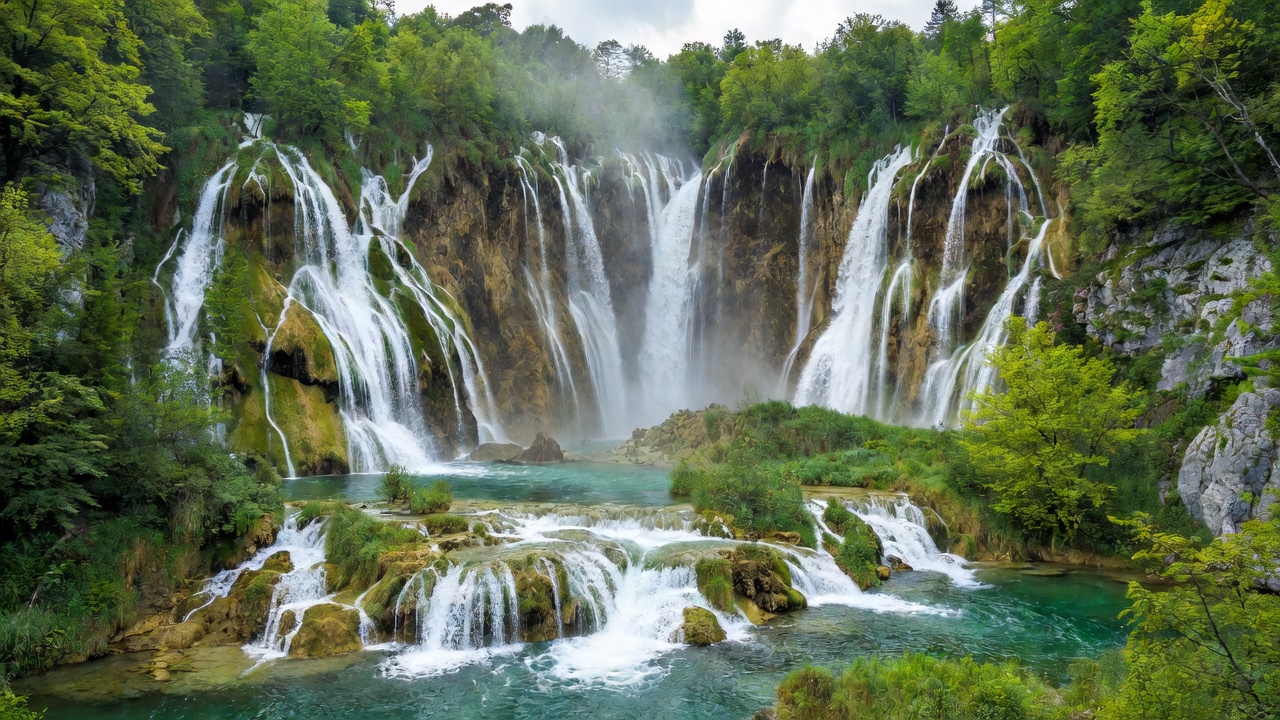
The Science of Travertine Formation
The Plitvice Lakes (Plitvička Jezera) constitute an extraordinary dynamic geological laboratory. The sixteen lakes are separated by naturally forming biological dams called tufa or travertine. Mosses (specifically Cratoneuron commutatum), algae, and aquatic bacteria extract calcium carbonate from the hyper-saturated karst stream waters, encrusting living vegetation and building barriers that grow upward and outward at an average rate of 1 centimeter per year.
Strict No-Swimming & Water Conservation Policy
Swimming, wading, fishing, and pet bathing are strictly forbidden anywhere in Plitvice Lakes National Park. Even minor sunscreen or chemical contamination disrupts the delicate biofilm responsible for building the travertine barriers.
Upper Lakes vs. Lower Lakes: Navigating the Circuits
The national park is divided into two distinct ecological zones, connected by electric ferry boat across Lake Kozjak:
1. The Upper Lakes (Gornja Jezera)
Comprising 12 lakes nestled in deep dolomite geology, surrounded by dense primeval beech-spruce forests. The trails here feature quiet wooden boardwalks that weave directly across bubbling rapids and tranquil turquoise ponds like Prošćansko and Galovac.
2. The Lower Lakes (Donja Jezera)
Set within a 40-meter-deep permeable limestone canyon, home to the Great Waterfall (Veliki Slap)—Croatia's highest single cascade plunging 78 meters into the Sastavci basin. This section is dramatic and sheer, with dramatic overhead vistas from the canyon rim.
Recommended Route: Program C (8.0 km Loop)
For an optimal full-day immersion without backtracking, enter at Entrance 1 (North) at 08:00 AM. Descend directly to the Great Waterfall before the tourist buses arrive, walk along the Lower Lakes to the P3 boat pier, take the quiet electric ferry across Lake Kozjak, and traverse the Upper Lakes up to Okrugljak before taking the eco-panoramic shuttle back to the entrance.