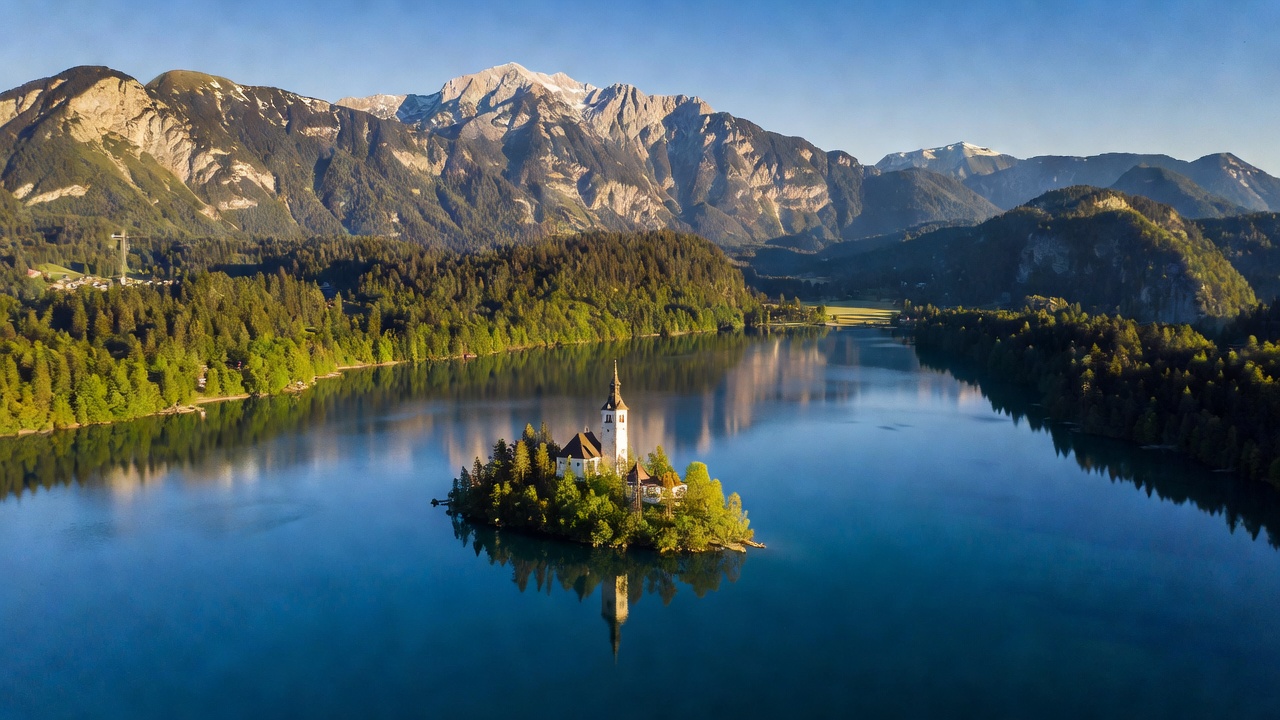
Geological Origins & Hydrology
Formed at the conclusion of the Last Glacial Maximum when the Bohinj Glacier retreated from the Radovljica basin, Lake Bled (Blejsko Jezero) is a textbook subalpine kettle basin fed by thermal springs on its northeastern flank. These submerged thermal vents keep the lake water around 23°C (73°F) during the height of July and August—unusually mild for an alpine water body fed directly by surrounding glacial runoff.
Zero-Combustion Environmental Policy
Motorized watercraft are strictly prohibited on Lake Bled. Transit across to the central islet is restricted exclusively to traditional wooden pletna boats hand-oared by licensed guild oarsmen, or human-powered wooden rowboats rented at designated public boathouses.
Essential Trail Topography & Viewpoints
While the standard 6.0-kilometer lakeside perimeter loop is paved and family-friendly, authentic nature immersion lies in the forested limestone ridges guarding the western shoreline:
1. Ojstrica (611 meters)
A sharp, rocky 20-minute scramble starting from the Velika Zaka campsite cove. Marked with yellow-blaze trail markers, the summit features a solitary wooden bench overlooking the entirety of the turquoise lake with Mount Stol and the Karawanks range in the backdrop.
2. Mala Osojnica (685 meters)
Positioned directly above Ojstrica and reached via a steep series of metal staircases anchored directly into the limestone rock face. This viewpoint provides the iconic postcard angle and is prime for capturing the morning inversion mist between 06:00 and 07:30 AM.
Vintgar Gorge Side Expedition
Just 4 kilometers northwest of Lake Bled lies the 1.6-kilometer Vintgar Gorge (Soteska Vintgar), carved by the emerald Radovna River between the vertical slopes of Mount Hom and Mount Boršt. The canyon ends at the roaring 13-meter Šum Waterfall, one of Slovenia's highest fluvial waterfalls.
- Entry Requirement: Timed-entry reservations are mandatory from May to October to prevent boardwalk overcrowding.
- Footwear: High-traction waterproof trail shoes are required due to perpetual moisture and mist spray on the timber boardwalks.
Where to Stay: Sustainable Accommodations
We recommend small-footprint alpine chalets in the nearby villages of Ribno and Selo pri Bledu, which avoid high-density lakeshore developments while supporting local organic agricultural communities.